
Editor's Note
This editor’s note highlights the key facts and market implications behind “Interest in Carbon-Neutral Products and Technolo”, with emphasis on sourcing, product fit, fabrication, logistics, or buyer impact.
With the expansion of the Zero-Energy Building (ZEB) certification system set to take effect next month, the focus is intensifying on products and technologies that enhance energy efficiency. The building materials and construction industry is fully committed to technological development in preparation for this shift. Starting in June, the ZEB system will be extended to private apartments, officially triggering a market realignment centered on building materials and technologies that reduce energy consumption. Major domestic building materials and construction companies are now accelerating the development of technologies to achieve carbon neutrality in buildings. Windows, in particular, are emerging as a crucial element in zero-energy design, as they account for over 40% of a home's energy loss, making high-performance windows essential. Consequently, the building materials industry is concentrating its efforts on establishing lineups focused on high-performance windows.
Hugreen’s High-Insulation Products
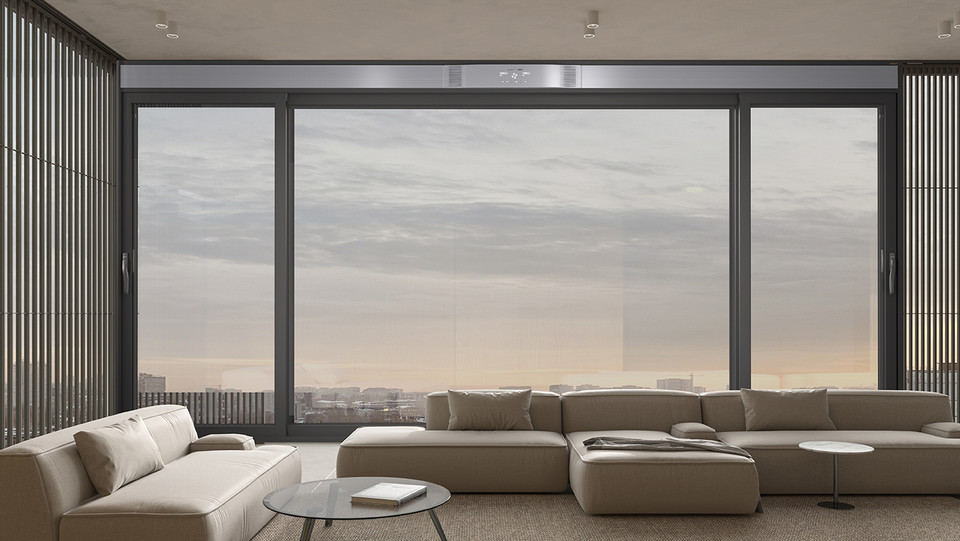
Hugreen, the building materials brand of Kumho Petrochemical, is aligning with market trends by strengthening its product portfolio centered on high-insulation materials like the 'Auto Ventilation Window Pro' and 'PF Board' to respond to ZEB requirements. Its flagship product, the Auto Ventilation Window Pro, is a high-insulation window system that uses AI to detect indoor air quality and automatically ventilate without opening the window. A triple safety filter system blocks outdoor pollutants like ultrafine dust, bacteria, and viruses, allowing only clean air to enter and maintain a comfortable indoor environment.
Furthermore, it features a silver coating on the glass surface to protect indoor warmth while blocking outdoor solar heat, enhancing insulation performance. A quadruple airtight structure design maintains airtightness, reducing heating and cooling losses. The company also strengthened its building materials lineup last year with the launch of the premium insulation PF Board. Hugreen's PF Board achieves high insulation performance with a thermal conductivity of 0.020W/m·K while being thin enough for easy construction, improving space utilization and maximizing energy efficiency. Kumho Petrochemical ensured it meets revised semi-non-combustible test standards for fire safety and is halogen-free to minimize toxic gas emissions in case of fire.
GS Construction’s Energy-Saving Lighting
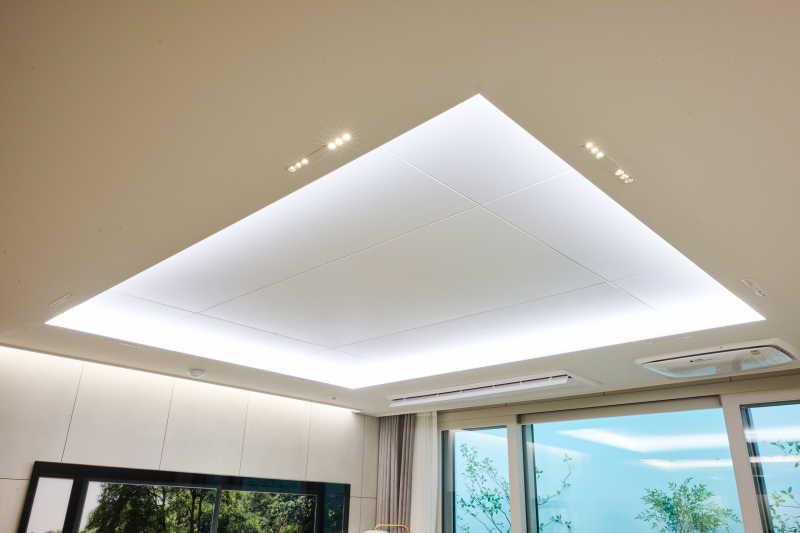
GS Construction has independently developed 'Energy-Saving Lighting' for application in its premium residential brand, Xi. This new lighting system reduces unnecessary energy consumption by 30-50% compared to conventional systems, achieving both practical electricity bill savings and reduced carbon emissions. It is characterized by the development of a lighting system equipped with ultra-high-efficiency LEDs and IoT-based smart control functions for each household unit. Additionally, GS Construction became the first domestic builder to develop a 'Hidden Lighting System,' where space and lighting are perfectly integrated, adding a unique design element. The design, which considers customer space utilization and aesthetic sense, is drawing attention both inside and outside the industry.
Lotte Construction’s Building-Integrated Photovoltaic System
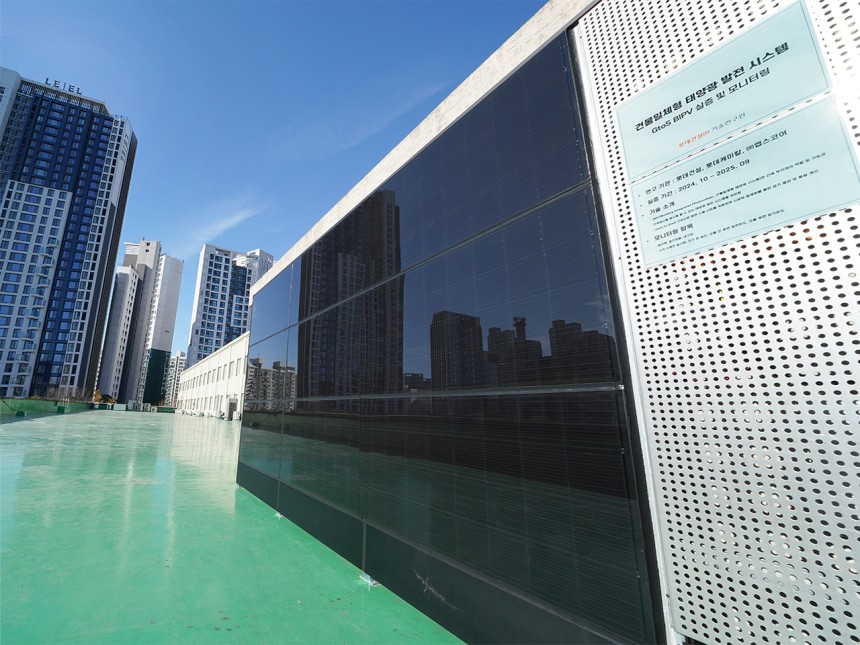
Lotte Construction has been piloting a photovoltaic power generation system at its headquarters since last October and is conducting joint research with Lotte Chemical, EPS Core, and Standard Energy. The Building-Integrated Photovoltaic (BIPV) system is installed on the building's exterior walls, simultaneously performing electricity generation and serving as an architectural cladding material. This eliminates the need for separate installation space, making it highly usable in urban buildings. Lotte Construction is also pursuing research to ensure the durability of photovoltaic modules and improve construction efficiency. For instance, the BIPV modules are made with glass on the front and steel plate on the back, rather than a double-sided glass lamination method, to reduce weight. Moreover, the photovoltaic film material uses 'Polyolefin Elastomer (POE).' The company is currently conducting joint research with Lotte Chemical to analyze the characteristics of POE raw materials and optimize them to improve the BIPV lamination process efficiency.
Source: Read the original article | Published: May 21, 2025