
Editor's Note
This editor’s note highlights the key facts and market implications behind “News Perspective: Controversy Over Precious Cora”, with emphasis on sourcing, product fit, fabrication, logistics, or buyer impact.
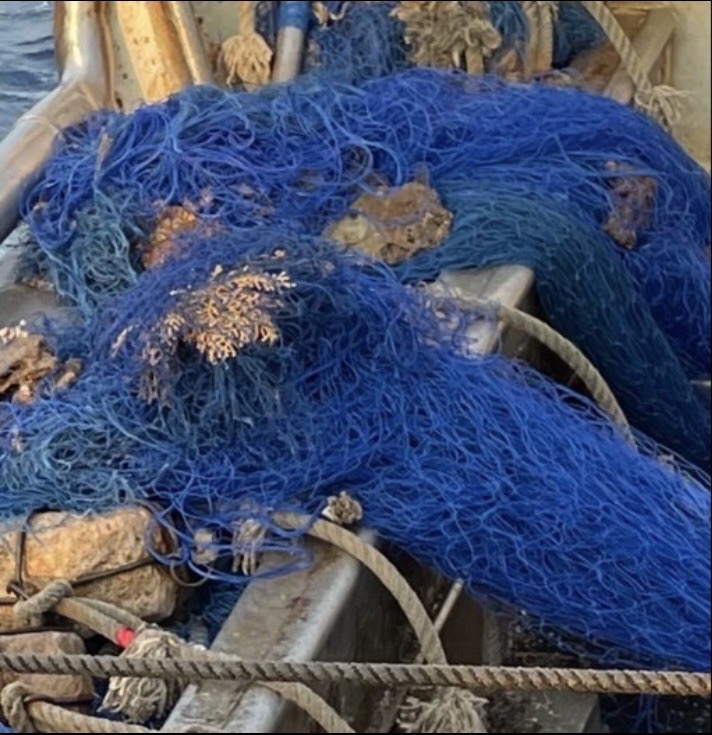
Fishing vessels use entanglement nets with sinkers at the front to harvest precious coral. Photo provided by a reader.
News Perspective / Precious Coral Harvesting Methods Spark Controversy, Environmental Injustice
2023-06-24 03:54:39 United Daily News / Reporters Wang Yongchao and Zheng Chaoyang The Fisheries Agency designated waters 12 nautical miles off Kaohsiung for fishermen to harvest precious coral, sparking backlash from some fishermen due to overlap with traditional fishing grounds and bringing the contentious issue of precious coral harvesting back into the spotlight. Precious coral is mostly processed into jewelry and art pieces, and due to its rarity, prices have soared. However, in the face of marine conservation trends and Taiwan's use of traditional harvesting methods, this practice has been tainted with the stigma of environmental injustice, and Taiwan must address this cautiously. Taiwan's precious coral industry once flourished, contributing significantly to economic development. At its peak, up to 300 fishing vessels operated in Pacific waters, including those near Taiwan and Japan, earning Taiwan the title "Coral Kingdom." However, due to unrestricted large-scale harvesting, precious coral production has steadily declined. Just as the industry was on the verge of disappearing, the Fisheries Agency issued licenses for over a hundred fishing vessels to resume harvesting, reviving the industry but also intensifying controversy.

The harvesting of precious coral has touched a sensitive nerve in the conservation community, mainly because Taiwan's fishing methods still rely on traditional sinkers and entanglement nets, which easily damage coral. Additionally, according to academic research, the catch volume and quality of precious coral in waters near Taiwan continue to decline, raising questions of overexploitation. The Council of Agriculture, recognizing the need for sustainable precious coral fisheries, established the "Regulations for Fishing Vessels Operating Coral Fisheries," setting a cap of 60 operating vessels, designating five specific fishing zones and three designated fishing ports for entry and exit, and requiring vessels to install position reporting devices and cooperate with observers for scientific monitoring. However, how to supervise and implement these measures has always been difficult to ascertain in practice. The recent opening of Kaohsiung waters as an exploration area has further confirmed external doubts, exposing the lack of thorough resource surveys for precious coral in waters near Taiwan. Without a total allowable catch for regulation, how can the official figures be deemed reasonable? How can it be ensured that fishing vessels are not operating deceptively? Precious coral grows in deep seas over 100 meters deep, where sunlight does not reach, making it difficult for ordinary divers to see their original form. Due to Taiwan's lack of specialized instruments and equipment, research on precious coral is extremely limited. Even fishermen rely mostly on generational experience for harvesting. Scholars have proposed methods such as robotic arms or unmanned vehicles to replace traditional fishing methods, aiming to reduce damage to the marine environment while sustaining fishermen's livelihoods. However, no improvements have been seen over the years, posing a challenge for the industry. Harvesting precious coral is a beautiful yet dangerous trap. The government has long recognized the problem, but to help fishermen shed the stigma of environmental injustice, concrete action is needed.
Source: Read the original article | Published: June 24, 2023