
Editor's Note
This editor’s note highlights the key facts and market implications behind “New Breakthrough in Taiwan’s Geothermal Developm”, with emphasis on sourcing, product fit, fabrication, logistics, or buyer impact.
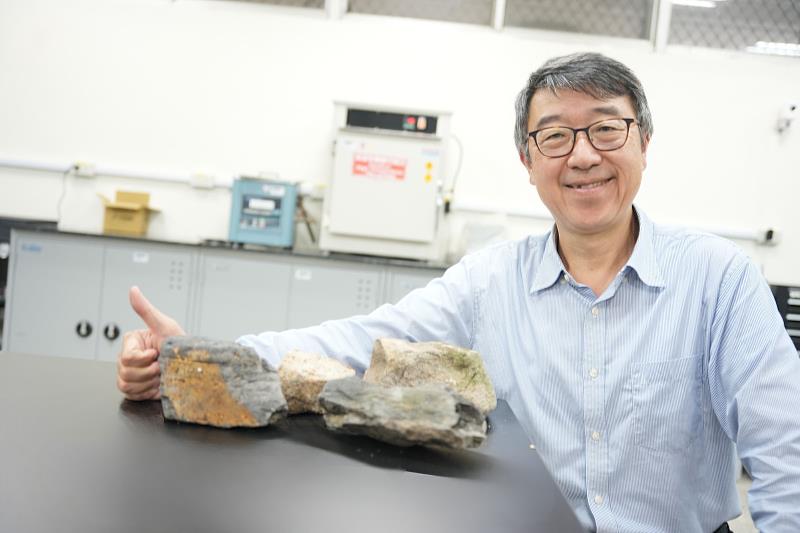
National Central University's College of Earth Sciences, through its Institute of Applied Geology and Carbon Sequestration and Geothermal Research Center, has proposed a new method for evaluating the relationship between slate formation permeability and depth, opening new directions for Taiwan's geothermal resource assessment and power plant feasibility analysis. As the world moves toward net-zero carbon emissions by 2050, geothermal energy is considered a key green energy option. A research team led by Professor Dong Jiajun from the Institute of Applied Geology and Carbon Sequestration and Geothermal Research Center at National Central University recently published findings in the top international journal Rock Mechanics and Rock Engineering . They proposed a new method for evaluating the relationship between slate permeability and depth, successfully clarifying the most critical and difficult-to-obtain subsurface fluid conductivity parameters in the early stages of geothermal development, paving the way for Taiwan's geothermal resource assessment and power plant feasibility analysis. Professor Dong Jiajun noted that Taiwan is located at the boundary between the Eurasian and Philippine Sea plates. Rapid orogenic processes have uplifted deep, high-temperature slate to shallower depths, giving the region geothermal development potential. However, slate is a metamorphic rock formed by temperature and pressure, with low porosity and fluid flow controlled by fractures. Its permeability is difficult to measure directly, which has long been a bottleneck in assessing geothermal development potential. To address this issue, Professor Dong's team used slate samples from the Hongye Formation in Taitung as their research subject. They employed a high-pressure permeability measurement instrument donated by Professor Shimamoto of Kyoto University during the Chelungpu Fault Project and installed at National Central University. Experiments were conducted at pressures up to 60 MPa, equivalent to a depth of approximately 3,500 meters, successfully measuring the conductivity parameters of slate. Based on these measurements, they established a "permeability-depth model with dual contributions from rock mass and fractures."
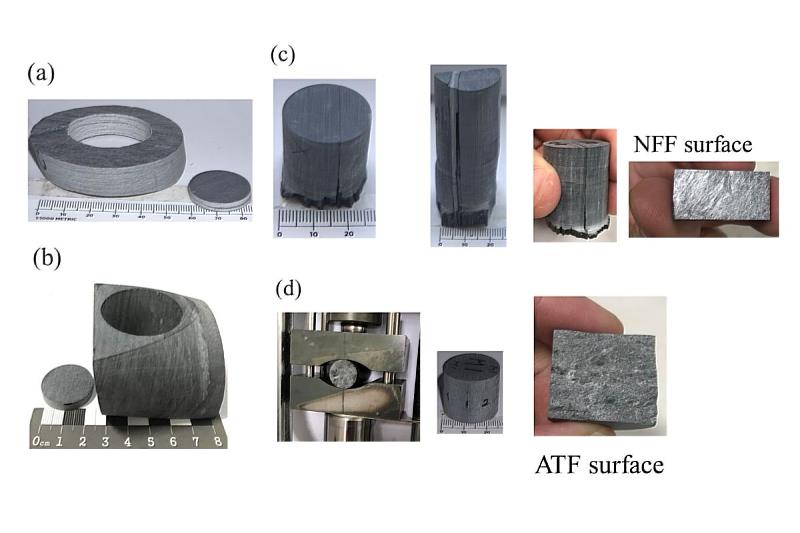
By measuring the flow rate of fluid through slate fractures under a fixed pressure difference, the team could determine how fracture width changes with pressure. Traditional potential assessment methods often only identify "thermal resources" deep underground but cannot quantify heat exchange and power generation based on "channel width" and "flow rate." The research team can precisely measure subsurface fracture widths and convert them into overall slate permeability, ensuring that green energy developers can assess power generation efficiency in advance and reduce development risks. Professor Dong Jiajun stated that this study provides a simplified assessment process applicable during the preliminary geothermal survey phase. Before drilling or in-situ monitoring, it allows for rapid estimation of the fluid conductivity of target formations, helping the government and industry prioritize geothermal potential areas and evaluate economic feasibility. The results offer a key scientific basis for Taiwan's independent development of geothermal potential assessment technology and can also serve as a reference for countries and regions with similar geological conditions, such as the Harz Mountains and Göttingen areas in central Germany. The research team expressed gratitude for support from the National Science and Technology Council and the Ministry of Education's Higher Education Sprout Project. Current research in rock mechanics and rock engineering is gaining attention due to the increasing need for in-depth understanding of rock properties in major national infrastructure projects, such as high-speed rail, dams, and tunnels, as well as green energy development, including geothermal energy and carbon sequestration. The team will continue to collaborate with industry, government, and academia to promote interdisciplinary research in Earth systems and energy engineering.
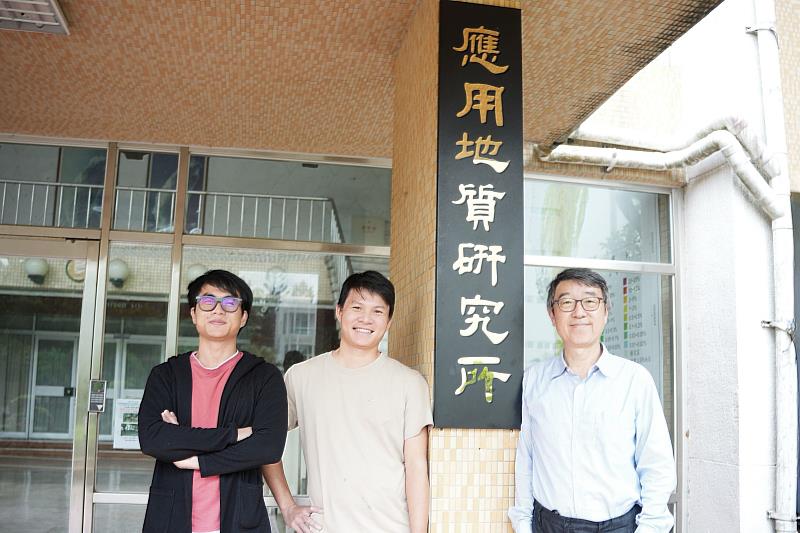
Through in-depth study of slate, this research has successfully clarified the most critical and difficult-to-obtain subsurface fluid conductivity parameters in the early stages of geothermal development. Image provided by Professor Dong Jiajun. Professor Dong Jiajun's laboratory team at the Institute of Applied Geology, National Central University.
Source: Read the original article | Published: November 10, 2025