
Editor's Note
This editor’s note highlights the key facts and market implications behind “United States Records Over 500 Cases of Silicosi”, with emphasis on sourcing, product fit, fabrication, logistics, or buyer impact.
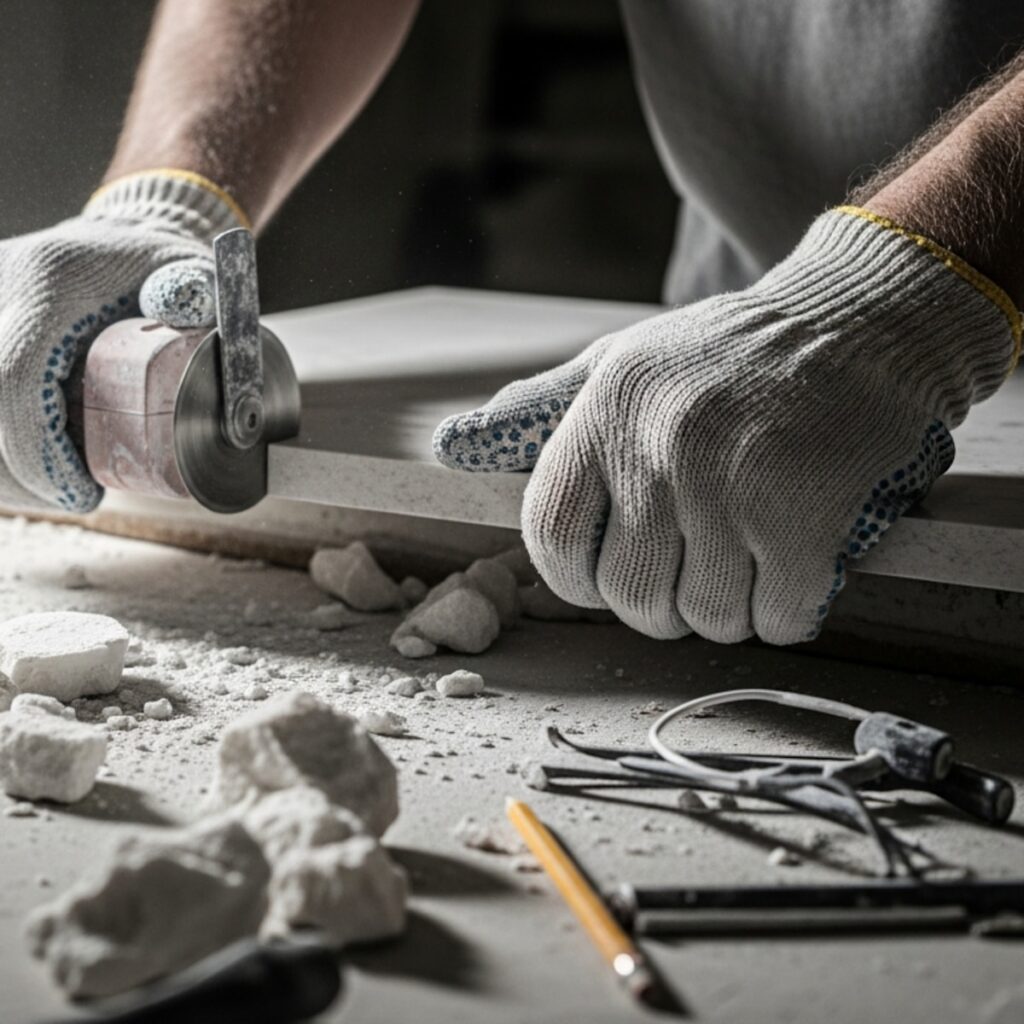
Silicosis, a lung disease historically linked to mining, has resurfaced strongly among workers in the artificial quartz countertop industry in the United States. The phenomenon primarily affects young, mostly Hispanic men, sparking a national debate on regulations and corporate responsibility.
The scale of the problem was revealed by official figures: in California, since 2019, 519 cases linked to artificial stone production have been confirmed, with 29 deaths and an average age at diagnosis of 46, according to CBS News reporting based on state data.
The boom in quartz countertops has propelled a market valued at USD 30 billion, increasing the presence of this material in American and other countries' kitchens. While manufacturers maintain that the process is safe under strict dust controls and use of protective equipment recommended by the Occupational Safety and Health Administration (OSHA), doctors, workers, and lawyers warn that the high crystalline silica content—which can reach up to 95%—makes this material a risk nearly impossible to neutralize in practice.
The Artificial Stone Industry and the New Wave of Silicosis in the United States
César Manuel González, a former sector employee diagnosed in 2023, is one of many affected individuals who have required a lung transplant, which extends life but forces permanent dependence on immunosuppressant drugs and constant medical monitoring. As explained by occupational pulmonologist Sheiphali Gandhi of the University of California, San Francisco, a leading figure in medical research, the prognosis after a transplant rarely exceeds eight years of survival.
The lack of a national reporting system has made it difficult to register those affected. In the United States, silicosis surveillance varies by state, preventing knowledge of the real figure at the federal level. Nevertheless, doctors and health officials warn of a sustained increase in cases over the last decade, with significant hotspots in California, Texas, Florida, and the Northeast of the country.
The controversy over the material's safety has moved to the judicial and legislative arenas. More than 370 lawsuits accuse international manufacturers Caesarstone, Cosentino, and Cambria of failing to warn about the risks or of marketing a product impossible to handle safely. Simultaneously, discussion is advancing in Congress on the Protection of Lawful Commerce in Stone Slab Products Act, which seeks to exempt manufacturers and distributors from civil liability for damages arising from the production or sale of artificial stone, according to CBS News.
“This is comparable to the tobacco industry saying cigarettes are safe.”
David Michaels, former Deputy Secretary of Labor and former head of OSHA under Barack Obama, denounced this comparison.
For their part, workers' lawyers emphasize that, even when complying with regulations, the serious danger persists due to the material's own composition and not solely due to defects in protocols.
International Precedents and Recent Regulatory Changes
The first modern alerts about silicosis associated with quartz emerged in Israel in the 1990s, when doctors warned of severe cases in young workers, many of whom needed lung transplants after brief exposure. Caesarstone, a company founded in an Israeli kibbutz, popularized synthetic quartz globally.
In Australia, after implementing systematic screenings, health authorities concluded the risk was unacceptable even under strong regulations. This led, in 2024, to a ban on manufacturing, supplying, or installing stone with high silica content and to the development of low or crystalline silica-free alternatives.
The American market is beginning to reflect this change. In 2025, Caesarstone US launched products with less than 1% silica; the Spanish company Cosentino reported that one-third of its portfolio contains less than 10% crystalline silica.
Personal Consequences and Challenges for Prevention
The testimonies of affected individuals like Gustavo Reyes, diagnosed in 2021 and transplanted in 2023, highlight the human magnitude of the problem.
“Those who cut, those who fabricate the artificial stone, get harmed,” he stated.
Reyes worked for years in small workshops employing measures like water to reduce dust and masks, although the controls proved insufficient.
“What they told us was that there was no treatment, that I had three to five years left to live,” he shared with CBS News.
The American industry continues to use the OSHA standard, in effect since 1971 and updated in 2016, without distinguishing between natural stone and synthetic quartz, despite differences in silica content and the potential to form respirable particles when cutting or polishing.
The debate on how to protect workers and define responsibilities remains open. Throughout this process, the experience of González, Reyes, and numerous workers shows that silicosis continues to be a serious threat in home construction and remodeling in the United States.
Source: Read the original article | Published: March 12, 2026