
Editor's Note
This editor’s note highlights the key facts and market implications behind “As Artificial Stone Countertops Kill Workers, Ho”, with emphasis on sourcing, product fit, fabrication, logistics, or buyer impact.
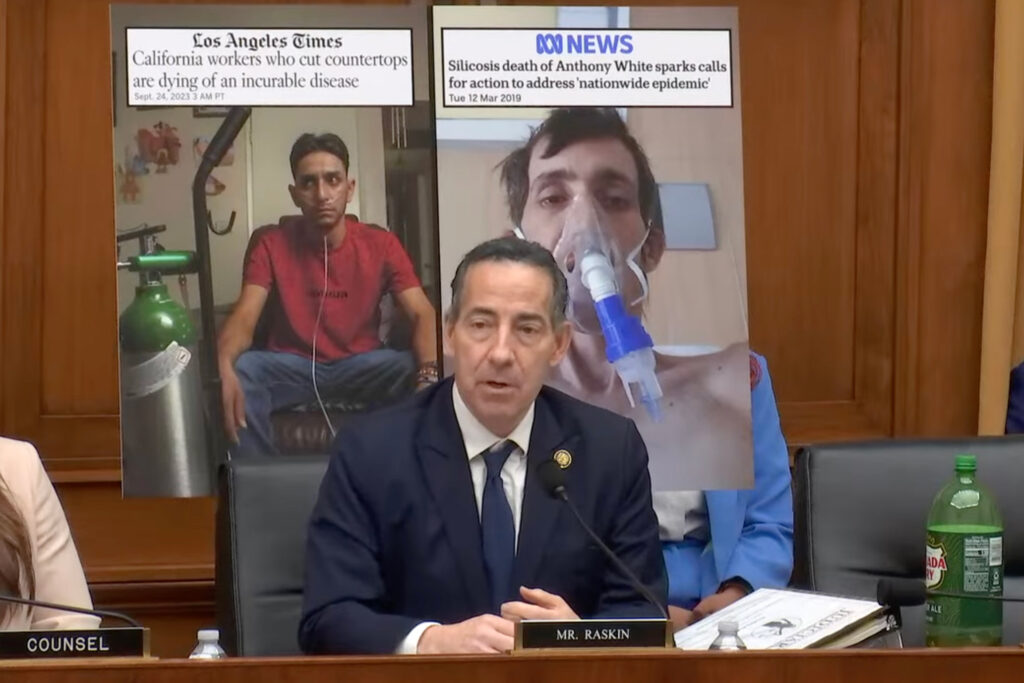
In the engineered stone industry, the differences between the concerns of America's political parties could not have been clearer when it comes to injured workers. Those who work in the artificial stone industry face the risk of exposure to silica dust, particularly when they prepare engineered stone slabs—formed by combining petroleum-based resins with pigments and pulverized crystalline silica—for installation. Twenty-seven artificial stone workers have died of silicosis since 2019 in the United States. Yet the real victim, in the eyes of industry representatives and their Republican allies, is an industry that views workers' efforts to recoup lost wages and budget-busting medical costs as an unjust money grab designed to bankrupt companies they say have no responsibility for how their products are cut, shaped and finished before installation.
“Our hearing this morning examines the troubling rise of abusive litigation against the U.S. stone slab industry,” Rep. Darrell Issa, R-Calif., said at the Wednesday hearing.
Issa, a sponsor of a bill that would shield artificial stone slab manufacturers from lawsuits, blamed “bad actor” firms that buy those products and skirt health and safety regulations as they prepare them for installation. He played a video showing how such “fabrication” shops could keep employees safe. The video was produced by the Cambria Co., the largest domestic manufacturer of artificial stone slabs.
Issa thanked the company for providing expert advice to companies who could help their workers avoid exposure to silica dust by following OSHA standards. The Republican-controlled subcommittee invited three representatives of the $30-billion artificial stone industry to testify. All praised H.R. 5437, the Protection of Lawful Commerce in Stone Slab Products Act. The bill, sponsored by Rep. Tom McClintock, R-Calif., promised the luxury countertop industry the same immunity from civil lawsuits enjoyed by the gun industry.
“Despite complying with all applicable law, including OSHA regulations, we are under attack from hundreds of lawsuits,” Shult said, acknowledging that workers who file the suits are succumbing to diseases caused by hazardous conditions on the job, but blaming bad actors for those exposures.
Cambria has no control over these third-party businesses that don't follow OSHA laws, said Shult, who said that rogue fabricators are cutting corners and “putting profits over people.”
Instead of holding these bad actors accountable, she said, “lawsuits are being filed against dozens of innocent stone slab manufacturers.”
McClintock called it an injustice that Cambria and other manufacturers are being sued for the illegal practices of fabrication shops. “It appears that instead of enforcing the law against these illegal practices, the Democrats prefer to drive you out of business.”
Jim Hieb, CEO of the trade group Natural Stone Institute, thanked McClintock for introducing a bill that “brings fairness to the sellers of stone slabs,” while calling for more enforcement from OSHA.
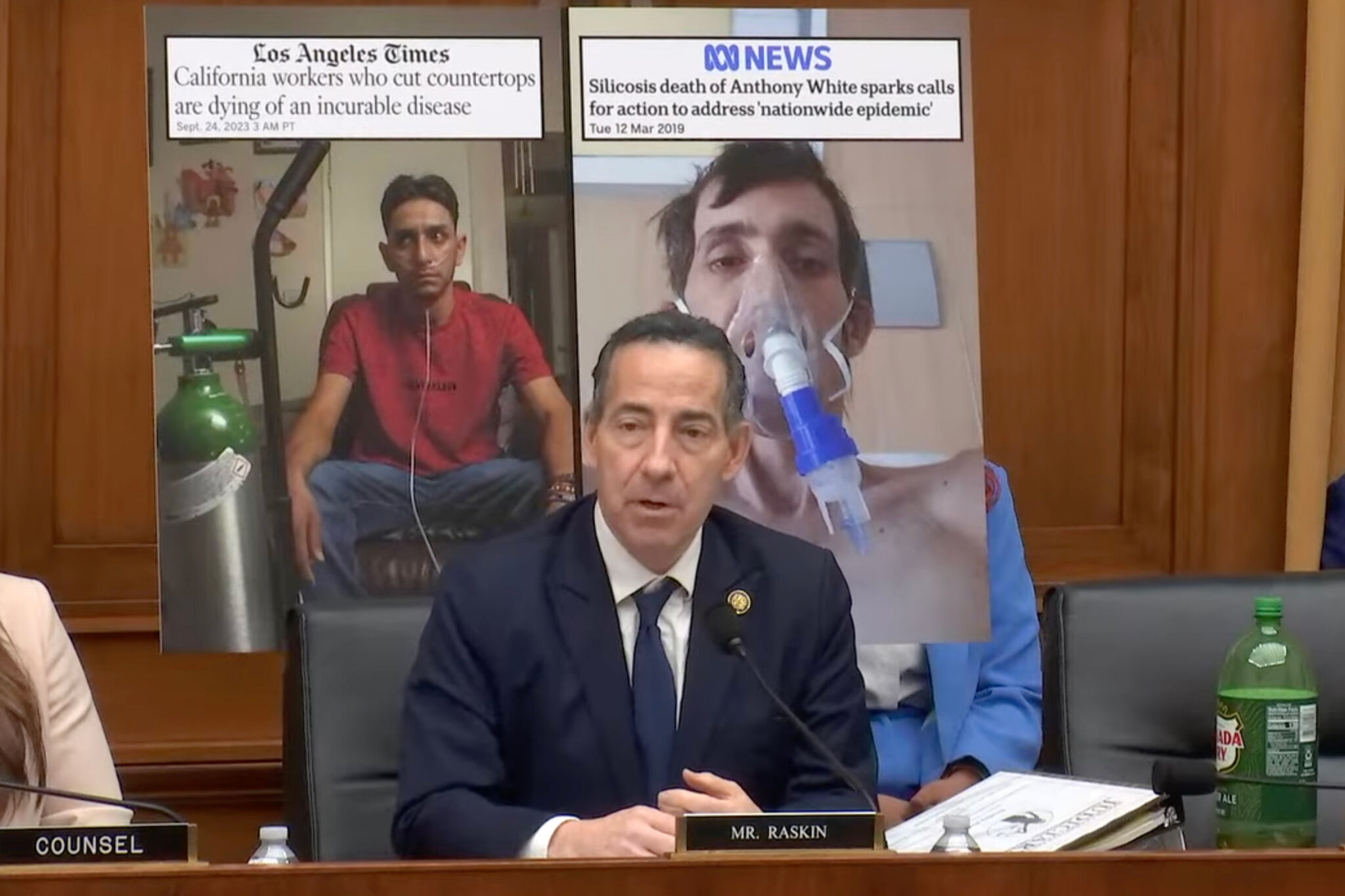
Michaels, who has testified at dozens of congressional hearings, said he's never been to one where Republicans heaped so much praise on OSHA and underscored its importance.
They kept saying if only fabricators followed OSHA rules, we wouldn't have this problem, he said. But the OSHA silica standard is based on economic and technological feasibility as well as health effects, because the law doesn't allow consideration of health protection alone, Michaels explained. “So just because you're within the silica standard from OSHA, it doesn't mean you're safe.”
Johnson entered into the record a letter from two physician-researchers from the University of California, San Francisco, Jane Fazio and Sheiphali Gandhi, who oppose H.R. 5437 because it rests on a fundamentally flawed premise: that artificial stone slabs are inherently safe and that worker harm arises primarily from noncompliant fabrication shops. That premise, they said, goes against clinical evidence, occupational health research and what they see in their medical practices.
“These products contain extremely high concentrations of crystalline silica—often exceeding 90 percent,” warned Fazio and Gandhi, who treat patients with silicosis. “Even with modern dust controls, cutting, grinding, and polishing artificial stone releases respirable silica at levels that overwhelm existing engineering and personal protective measures.”
“Surely we must be here to talk about how Congress can protect workers from artificial stone silicosis,” Johnson said, teeing up what he saw as the reason his Republican colleagues called the hearing.
Only a small fraction of fabrication shops have silicosis cases, Michaels told the committee. California has a good screening system for workers, unlike much of the nation, he said. There's every reason to think more cases will be identified, as long as exposure continues, Michaels told Inside Climate News.
Alarmed by the rising incidence of silicosis among California stone fabrication workers, the Western Occupational and Environmental Medical Association has urged California's Occupational Safety and Health Standards Board “to prohibit all fabrication and installation tasks on artificial stone that contain more than 1 percent crystalline silica.”
“We don't believe it solves the core problem, which are bad actor fabricator shops that are taking advantage of their workers and not providing a safe work environment,” he said.
Cambria is doing its part to address the problem through a learning-exchange center to train fabricators on safe processing techniques, Aberson said, though Shult told the committee the company does not require its buyers to complete the training.
As for overseeing its buyers' operations, Aberson said with 10,000 fabricators in the country, manufacturers aren't in a position to monitor the entire industry. “This is specifically why we have OSHA, and we have regulations,” he said, adding that they won't sell to shops they learn have unsafe conditions.
Source: Read the original article | Published: January 17, 2026