
Editor's Note
This editor’s note highlights the key facts and market implications behind “Ceramic Sanitary Ware Market Size, Share, and Tr”, with emphasis on sourcing, product fit, fabrication, logistics, or buyer impact.
Ceramic Sanitary Ware Market Outlook
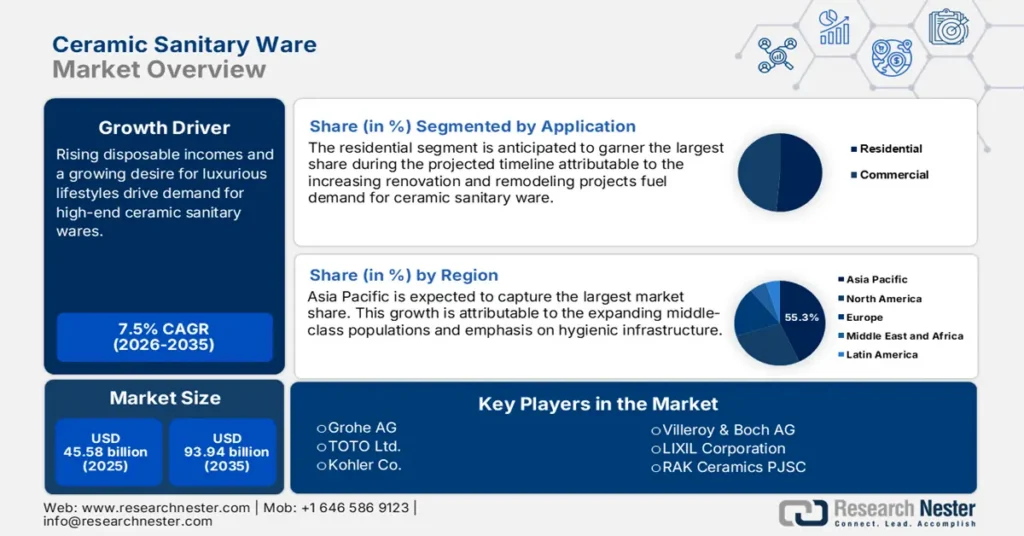
The ceramic sanitary ware market surpassed USD 45.58 billion in 2025 and is projected to reach USD 93.94 billion by 2035, registering a CAGR of approximately 7.5% during the forecast period from 2026 to 2035. In 2026, the ceramic sanitary ware industry size is estimated at USD 48.66 billion. The primary growth factor for the market is the increasing adoption of ceramic sanitary ware in building construction and other infrastructure processes. This high expenditure on construction is expected to expand the market size. Furthermore, population growth is also stimulating demand for a broad expansion of residential areas and locations, directly contributing to the development of the ceramic sanitary ware market. According to the US Census Bureau, the US population reached 340.1 million in July 2024, an increase of 0.98% from 336.8 million on July 1, 2023. Continuous product innovation and new launches by major manufacturers are also driving the ceramic sanitary ware market. Companies are introducing advanced designs, smart features, and eco-friendly solutions to meet evolving consumer preferences. For example, in November 2023, Utopia announced the launch of Corr, designed and manufactured to meet the demand for elegance and contemporary style with practical and ergonomic USPs. Additionally, premium product lines with appealing and durable aesthetics are gaining ground, further fueling market expansion across different regions.
Key Ceramic Sanitary Ware Market Insights
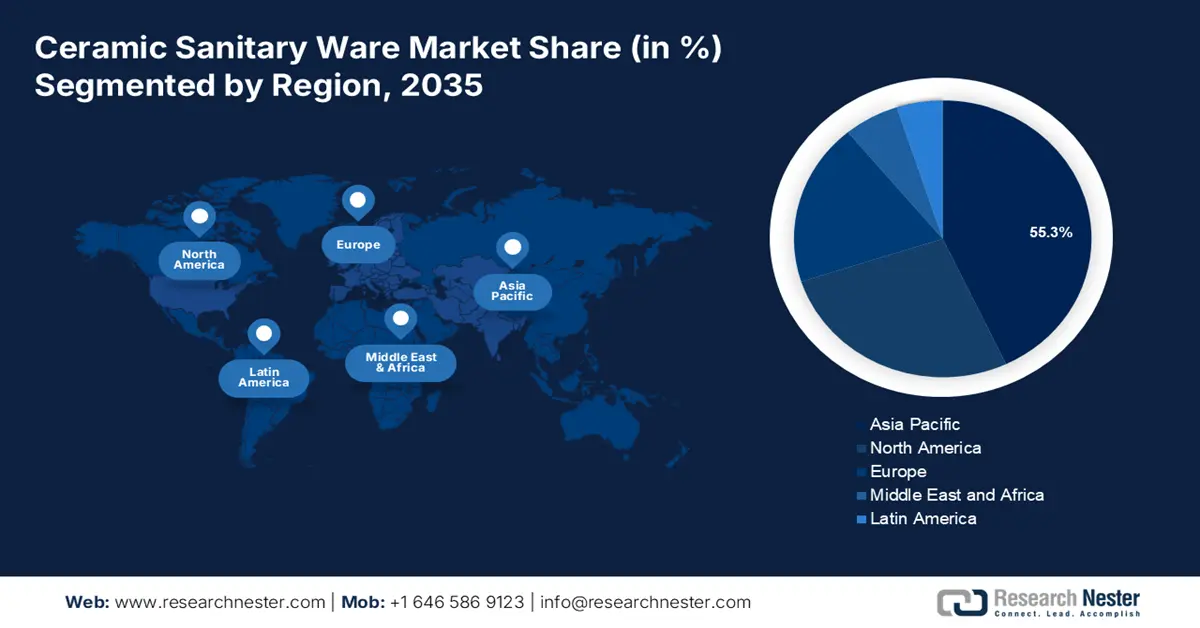
The Asia-Pacific ceramic sanitary ware market will reach a market share of approximately 55.30% by 2035, driven by growth in the construction sector and government housing initiatives. The residential segment in the ceramic sanitary ware market is projected to hold the largest share by 2035, driven by the extensive presence of residential real estate and urbanization stimulating housing demand. The offline distribution channel segment in the ceramic sanitary ware market is expected to grow considerably during the 2026-2035 period, thanks to customer preference for in-store product inspection and expert consultation. Key market players include Roca Sanitario, S.A, Kohler Co., TOTO LTD., Geberit International AG, LIXIL Corporation, RAK Ceramics PJSC, Villeroy & Boch AG, Grohe AG, DURAVIT Aktiengesellschaft, and Hansgrohe Deutschland Vertriebs GmbH.
Drivers and Challenges for Ceramic Sanitary Ware Market Growth
Stainless steel, glass, and composite materials represent a further challenge for the market. These alternatives often offer durability, lightweight properties, and contemporary designs, attracting consumers seeking innovative solutions. The growing preference for smart and eco-friendly materials increases competitive pressure, pushing traditional ceramic manufacturers to innovate constantly.
Ceramic Sanitary Ware Market Size and Forecast
Ceramic Sanitary Ware Market Segmentation
The residential segment is projected to achieve the highest market share in the ceramic sanitary ware sector by 2035, thanks to the extensive presence of residential real estate worldwide. The 2022 American Community Survey found that 125.7 million housing units were occupied in the United States. According to the United States Census Bureau in 2025, 698,000 new single-family homes were sold in 2024. Furthermore, the residential segment is expected to generate the highest revenue due to growing housing demand from an increasing population driven by urbanization. The transition towards high-quality living spaces further stimulates demand in this segment, making it a key driver for market growth. The APAC region in the ceramic sanitary ware market is projected to hold the largest market share, at 55.3%, by the end of 2035, due to rapid expansion of the construction sector, growing consumer demand, and the presence of major key market players in the regions. Countries like China and India dominate the market, driven by government housing initiatives, industrial and infrastructure development, and a surge in building renovations. For example, according to IBEF, the Indian infrastructure sector is poised for robust growth, with investments projected at USD 1.4 trillion by the end of 2025. India is a key market for ceramic sanitary ware, primarily due to evolving consumer preferences for elegant sanitary ware. In September 2024, the Indian Prime Minister launched the Pradhan Mantri Awas Yojana 2.0 program, supplemented by the Maharashtra government, which enacted the implementation of the Pradhan Mantri Awas Yojana (Urban) 2.0 program based on the concept of 'Housing for All' across the state. These government initiatives are supporting people in constructing residential buildings, ultimately helping to stimulate the market. Growing awareness about water saving and home automation technologies are driving the ceramic sanitary ware market in North America. The region's focus on green building initiatives and low-energy solutions has stimulated demand for eco-friendly sanitary products. The growing preference for luxury bathroom design further stimulates market growth.
Source: Read the original article | Published: October 13, 2025