
Editor's Note
This editor’s note highlights the key facts and market implications behind “Ghalia Sebti Exports Moroccan Zellige Worldwide”, with emphasis on sourcing, product fit, fabrication, logistics, or buyer impact.
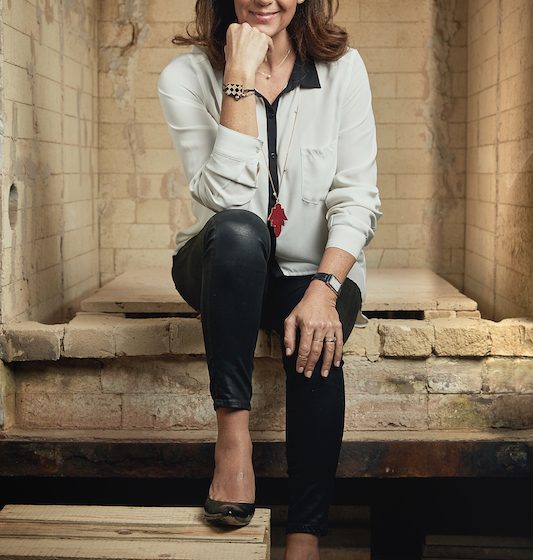
This drive to never rest on their laurels has enabled the company she co-directs with her husband to become a leader in exporting Moroccan zellige. Its name: Ateliers Aït Manos, meaning "tribe of hands" in Amazigh. A counter-current nod for the time, especially for people not of Berber origin.
Daughter of an import-export merchant of raw materials and textiles and a mother who started as a real estate agent at 40, the Casablanca native developed a taste for beauty and craftsmanship through family culture.
Within Aït Manos, roles are clearly defined. He handles creation and production; she is in charge of promoting and adding value to the products with major architects and private fortunes. A perfect tandem to grow the business, which imports faience paste from Great Britain and exports its production abroad.
For the exporting company, this international placement also aims to adapt to new import and export methods.
Exporting from Morocco is easier than 25 years ago. The modernization of customs, digitization, and streamlining of procedures have helped a lot. Now, it’s the increasingly strict standards of importing countries that are costly in certifications, and in this we are ahead.
She co-founded, 25 years ago with her husband Tawfik Bennani, the Ateliers Aït Manos which sells Moroccan zellige all over the globe. In 2018, they took the step of establishing a subsidiary in France to manage the digital part of their business, which reaches 1 million euros in turnover.
At 13, her dream was to become a ski champion. This enthusiast of trekking, hiking, and especially alpine skiing was the first Moroccan woman to participate in the Winter Olympics in Albertville in 1992.
I saw myself in sporting challenges,
explains Ghalia Sebti.
I still do 14 hours of sport per week today. It’s vital! Sport sets me in motion, and we ultimately experience the same thing in business.
My Fassi father must be one of the few Arabic speakers passionate about the Berber language, which he speaks fluently. I remember the drives with my husband in the Peugeot 505 without air conditioning towards the kasbahs of Ouarzazate (laughs). We didn’t understand why the beautiful heritage of Berber decorative art wasn’t being highlighted. My passion was tapestry. I loved it so much that I spent almost all of our wedding gift money on rugs!
This taste for authenticity, innovation, and tradition, Ghalia Sebti shares with her husband, Tawfik Bennani, child of Moroccan diplomats abroad (Senegal, Belgium, Great Britain, United States). They met in 1990 in Casablanca. She had to finish her international business studies in Paris and considered London next. Finally, after the Albertville Olympics, the couple settled in Casablanca. It took them a year and a half to start. Having raised one million dirhams in capital, they got the bank's green light in May 1994, just as she gave birth to their first child.
Failures and Perseverance
The period of economic restructuring in Morocco almost caused their bankruptcy and pushed them to work even more with the Moroccan clay from Fes.
A business is like a mountain trek. If you look at the summit, you won’t reach it. You have to handle things step by step. Failure is formative. It’s a flaw of the French or Moroccan system not to value failure. In the United States where my husband lived, people are less hung up about that!
It was from Uncle Sam's country that their salvation would come. First project for a "Moorish" villa in Florida for the owner of Vogue Magazine, Merit Award at Coverings, the international tile exhibition in Orlando in 1998, but also first meetings with renowned architects and designers in Paris and elsewhere.
Two Production Units
Pool of the Royal Mansour Hotel in Marrakech, mosque in Saudi Arabia, luxury villa in the United States or Australia, hall of Corisco Airport in Equatorial Guinea… The company now, after 25 years, has about sixty employees across its two production units (in Habous, Casablanca and Mediouna). All for a turnover of 13 million dirhams (1 million euros). Projects are abundant, especially as the couple never stops innovating with the creation of new colors like celadon green, gray, or gold, or new techniques.
Aït Manos is found in about fifteen countries, with Morocco representing only 5% of turnover.
Abroad, people love the Moroccan art of living. In our discourse, we have always praised the material. It is unique, handmade, and with different tones. Clients are attracted by the unique product as much as by its history dating back to the 9th century. We have 3 categories of clients (high-end tile distributors, interior architects, private individuals). In artistic crafts and handmade work, your value is your work and your technical skill.
In 2018, Ghalia Sebti and her husband sought to strengthen their positioning in e-commerce. She created Ait Manos France in Paris.
Our subsidiary in France manages our online site,
indicates Ghalia Sebti.
Source: Read the original article | Published: April 20, 2021