
Editor's Note
This editor’s note highlights the key facts and market implications behind “Company Visit to Veolia and Aufderhaar: From Was”, with emphasis on sourcing, product fit, fabrication, logistics, or buyer impact.
It all started at Kalkwijk 5 in Vroomshoop with sorting and selling used clothes hangers. This was followed by the production of flower pots. Today, a large company (60 employees) stands there, producing plastic granules from household waste. In short: packaging waste from the orange container and plastic waste from the municipal waste disposal site.
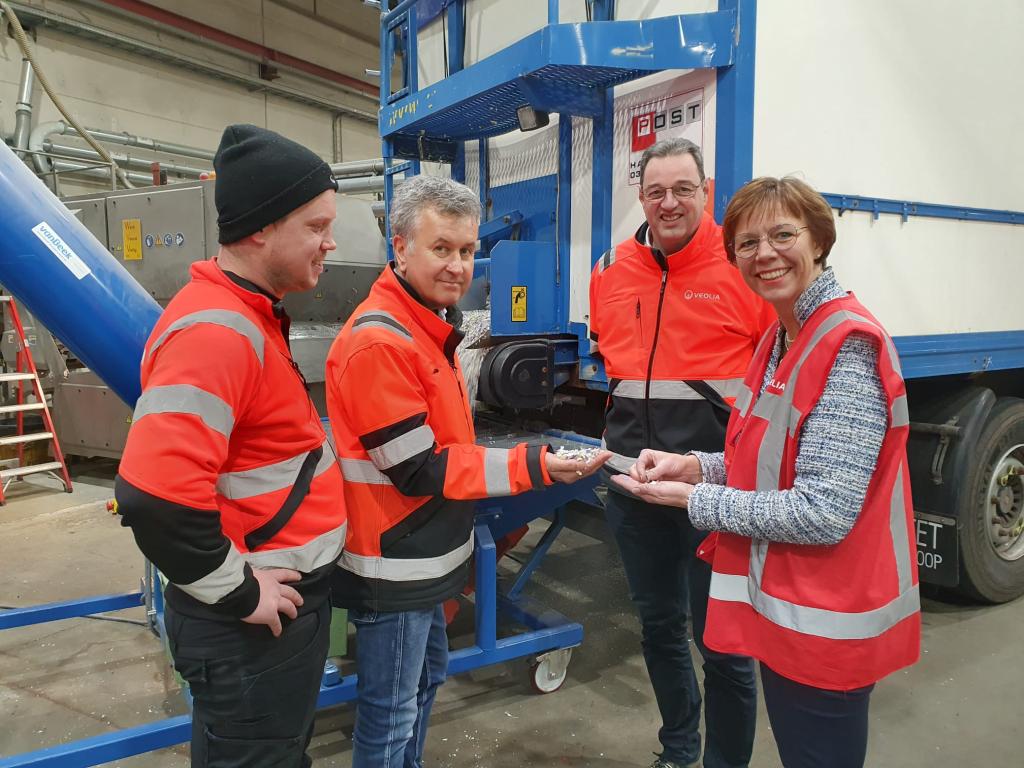
Councilor Aimée van der Ham and business contact officer Jacqueline Tuinbeek received an explanation and a tour from the commercial and operational managers Erwin Louwes, Frank Richters, and Sebastiaan Kok at Veolia Polymers. Together with sister company and supplier Aufderhaar Kunststof Recycling (15 employees), Veolia Polymers is part of the Veolia Group (worldwide more than 200,000 employees). Both companies are located in Vroomshoop.
From Waste to Raw Material
At the Aufderhaar Kunststof Recycling facility on De Sluis in Vroomshoop, waste arrives from, among others, ROVA and other waste sorters as bundled bales. It is then ground and washed into 'plastic confetti'. Grease and dirt are removed from the waste there. Once clean, the material goes to Veolia Polymers at Kalkwijk, where it is transformed into plastic granules. These clean polypropylene (PP) granules, according to pre-agreed specifications (possibly by color), are then sent back to companies. These companies use them as raw material for products such as plastic garden benches, parts for household appliances like vacuum cleaners and coffee machines, underlayers for soccer fields, flower pots, and cars.
700 Kilometers Around Vroomshoop
Per year, the company in Vroomshoop produces 45,000 tons of plastic granules. This is comparable to the volume of 32 Olympic swimming pools. The waste comes not only from the Netherlands but 90% from within a 700-kilometer radius around Vroomshoop.
“From England to Poland and from Portugal to Norway,” explains Erwin Louwes. “Many residents of our municipality have no idea that behind the doors of our company, their waste is being processed here into something sustainable, a raw material for products you encounter again in daily life.”
Sustainability
How does the company see itself in five years? "We want to become more sustainable, particularly regarding (green) energy, and to innovate further," says Frank Richters enthusiastically. "We want to wash and clean the waste even better, so the result is an even higher-quality product. The biggest future challenge for the company will be finding sufficient personnel and ensuring the availability of sufficient input streams."
Councilor Van der Ham is very impressed with the company: "It's remarkable that the company was already aware of the necessity of recycling 50 years ago and that they are now one of the largest plastic recyclers in the Netherlands."
Source: Read the original article | Published: December 06, 2022