
Editor's Note
This editor’s note highlights the key facts and market implications behind “Taiwan Ceramics Industry Faces Challenges of Lab”, with emphasis on sourcing, product fit, fabrication, logistics, or buyer impact.
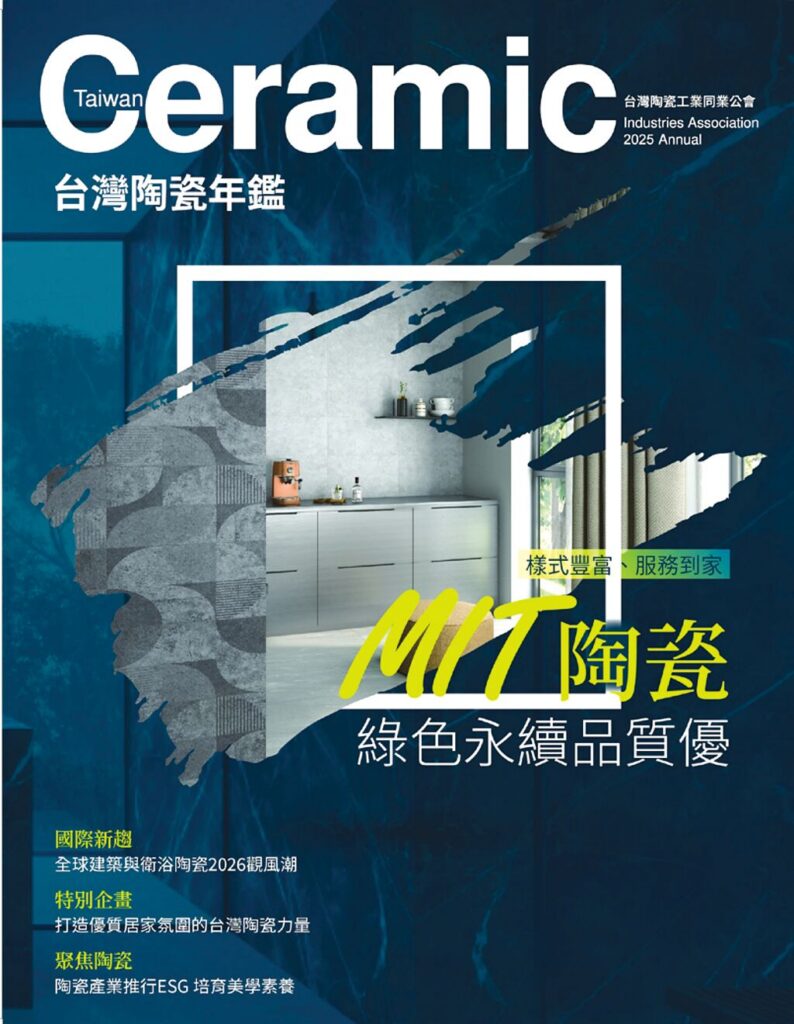
To promote high-quality ceramics made in Taiwan, the Taiwan Ceramic Industry Association has published the Taiwan Ceramics Yearbook, which will be distributed to exhibitors and visitors at the Taipei International Building Materials and Construction Exhibition. (Photo provided by the Taiwan Ceramic Industry Association)
Established in 1960, the Taiwan Ceramic Industry Association has entered its 21st term, witnessing the industry's peak in exports, a boom in domestic demand, and the challenges of international competition and cost pressures. The association notes that ceramics, as a traditional manufacturing and livelihood industry, encompasses daily-use, artistic, industrial, precision, sanitary ware, building tiles, and ceramic raw materials, playing an indispensable role in the industrial supply chain.
In 1994, the Taiwan ceramics industry was at its peak, with 260 member companies. However, due to a shrinking construction market, rising labor costs, and trade liberalization, the number of domestic manufacturers has declined year by year. Currently, there are only 75 member companies, but the industry still employs nearly 10,000 people. In terms of output value, the annual production value of tiles alone reaches NT$12.7 billion, with a total of approximately NT$20 billion, maintaining a certain scale and a stable role in the livelihood and building materials sectors.
The association points out that the industry currently faces several major challenges. First is the labor shortage : ceramics involves high-temperature, dusty, and high-risk working environments, making local workers reluctant to enter the field. The government's allocation ratio for migrant workers is only 15% to 20%, and companies report difficulty maintaining production lines. Second is the significant increase in production costs : over the past year and a half, natural gas prices have risen by 73% and electricity by 65%, leading to a 9% to 11% increase in production costs, severely impacting small and medium-sized kiln factories.
Additionally, foreign ceramic products have a price advantage. Products from India, Southeast Asia, and mainland China continue to squeeze the domestic market. Import tariffs on ceramics are only 10% or even lower, while Taiwanese exports face tariffs ranging from 15% to 60% and various certification requirements, making exports difficult. If a carbon fee of NT$300 per ton is imposed on domestic ceramics in 2026, while the border carbon fee system has not yet been implemented simultaneously, the competitiveness of domestic manufacturers will be further weakened.
The association states that future domestic ceramics will still leverage high quality and design as advantages, with manufacturers innovating and differentiating to enhance product value. At the same time, it calls on the government to provide a more equitable system in terms of energy prices, migrant worker policies, and trade measures to help the industry maintain competitiveness. The association also encourages consumers to choose domestic ceramics, which not only guarantee quality but also provide complete after-sales service, supporting the sustainable development of the traditional domestic industry.
Source: Read the original article | Published: December 10, 2025