
Editor's Note
This editor’s note highlights the key facts and market implications behind “ASAJA Calls for Boosting Wool Exports to Avoid S”, with emphasis on sourcing, product fit, fabrication, logistics, or buyer impact.
ASAJA Castilla y León is calling for measures to promote wool exports in order to take advantage of increased demand and rising prices. Sheep farmers are currently facing the shearing season, a necessary process for the animals that has for years only resulted in losses for the sector, as the cost of wool removal far exceeds the revenue it generates. ASAJA Castilla y León believes that neither the sector nor the authorities should resign themselves to this abnormal situation, and is calling for ways to revalue wool as a by-product rather than waste, capitalizing on the growing global demand and upward price trend.
Shearing with Significant Losses
Although a significant number of transactions have not yet been recorded, there is some improvement in the valuation of quality wools, such as those from the native Merino breed, which is wool-oriented. However, there are few such animals in Castilla y León. For the rest of the wools, which are predominant in dairy or meat breeds such as Assaf, Castellana, or Churra, the payment is around 5 euro cents per kilo, far from compensating for the average shearing cost of €1.50 per animal. An average farm with 500 sheep faces a cost of about €800, receiving barely 8% of the investment. In total, Castilla y León will collect 4.6 million kilos of wool, with a shearing cost exceeding €3.1 million.
Exports as an Alternative
The global wool market is showing signs of recovery. China has exhausted its stocks and is demanding product, mainly from Australia, while some textile manufacturers are seeking alternatives to polyester amid the energy crisis in the Middle East. Spain, the leader in sheep within the EU, could seize this opportunity following the reopening of exports to China at the end of 2025, which had been blocked for years by cases of sheep pox. ASAJA is asking the government to facilitate this export channel.
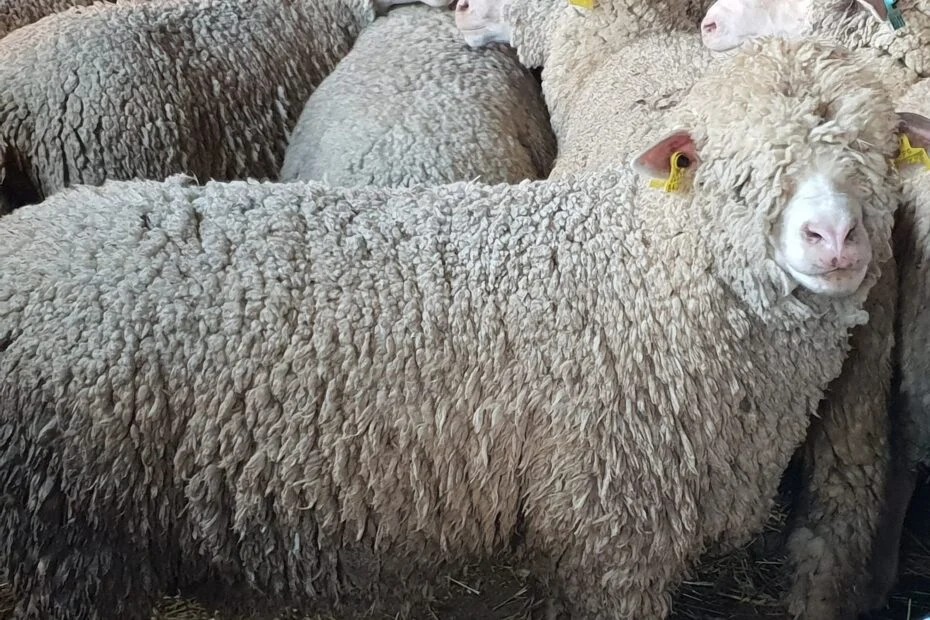
The organization proposes two fronts: one for higher-quality wool, destined for exclusive garments, and another for common wool, with potential for reuse in bioconstruction, insulation, or soil regeneration, areas that should receive institutional support.
Finding an outlet for wool is key to maintaining sheep farming, a sector with an uncertain future and demanding management. "The number of farmers and sheep continues to decline, even when lamb is worth more thanks to exports. The accounts are tight and problems are plentiful, including the imbalance of shearing costs relative to the value of wool," concludes ASAJA.
Sheep Sector in Castilla y León
Castilla y León is the third-largest community in terms of animal numbers, with 2.1 million head, behind Extremadura (3.4 million) and Castilla-La Mancha, and it is experiencing a general decline in census numbers and farms across all its provinces. Evolution of the sheep herd in the last decade, Castilla y León and Spain: 2014 vs 2024: Ávila 179,807 to 134,784; Burgos 232,098 to 130,082; León 461,939 to 356,233; Palencia 240,496 to 165,109; Salamanca 416,774 to 288,386; Segovia 268,344 to 162,807; Soria 237,130 to 150,753; Valladolid 352,893 to 224,621; Zamora 675,709 to 508,045; Castilla y León 3,065,190 to 2,120,820; Spain 15,431,804 to 13,476,030. *Source: Statistics and Agricultural Information Junta de Castilla y León
Source: Read the original article | Published: April 26, 2026