
Editor's Note
This editor’s note highlights the key facts and market implications behind “World Congress in Cordoba on the 900th Anniversa”, with emphasis on sourcing, product fit, fabrication, logistics, or buyer impact.
It has been 900 years since Abu-I Walid Muhammad Ibn Rusd, better known in the West by his Latinized name Averroes, was born in Cordoba. He is one of the great intellectuals of the most splendid period of the Almohad Caliphate. Grand philosopher, physician, and jurist of great prestige, astronomer and mathematician, he lived in a particularly troubled time, although it was probably no more turbulent than the world today, nine centuries later.
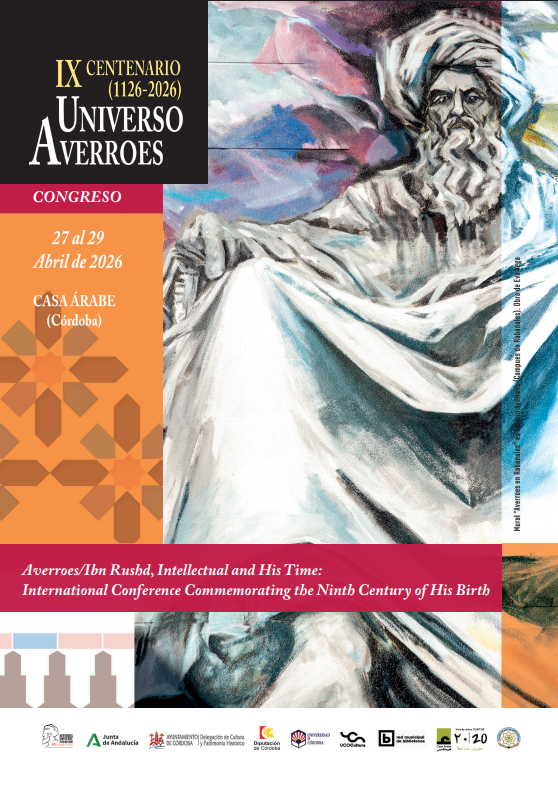
This 900th anniversary of Averroes' birth is especially celebrated by Casa Árabe, which has included in its program "Universo Averroes" the organization of an international congress at its headquarters in Cordoba, titled Averroes/Ibn Rushd, Intellectual and His Time .
Three days, from April 27 to 29, bring together a host of the best specialists on this immense figure, one of the most universal sons of Andalusian culture and civilization. Speakers such as Delfina Serrano, Cristina Cerami, José Bellver, Fouad Ben Ahmed, Catarina Belo, Richard C. Taylor, or Maribel Fierro will present in this very appropriate setting the conclusions of their research conducted at universities in Europe, America, and the Arab world, which contribute so much to renewing the study of Islamic philosophy and to highlighting its impact on global intellectual history. Among the main points of debate, it is worth emphasizing that concerning Averroes' singular ability to articulate reason and revelation, as well as the transmission of Aristotle's thought and its decisive influence on Latin scholasticism and medieval philosophy.

On the occasion of this congress, other less known aspects of his work, but no less important from a current perspective, are explored, such as his medical thought, his conception of science, or his political position in the context of Almohad domination. Born in 1126 in the city of Cordoba, already very populous at the time, Averroes was born into a very distinguished family. His grandfather had already been a qadi (magistrate), a tradition he would continue, acquiring from a young age the reputation of a great jurist. The first two Almohad caliphs, Abd al-Mumin (1130-1163) and Yusuf (1163-1184), showed him great esteem and trust, to the point that they submitted philosophical problems to him, even though professing philosophy in the caliphal milieu of the time tended to be equated with heresy. Averroes' explanations were so convincing that Yusuf was convinced by Averroes' thought, particularly by the delimitation between philosophy and religion, his interpretation of the Quran, and the two proofs he proposes for the existence of God. Yusuf appointed him court physician and entrusted him, both in Spain and Morocco, with a series of missions that, successfully carried out, earned Averroes the appointment in 1182 as qadi of the qadis of Cordoba, that is, supreme magistrate.

The third caliph, Yaqub al-Mansur (1184-1199), had to protect Averroes from the anger unleashed by Islamic theologians, who saw in secular sciences, especially philosophy, a danger to religion. While confined for his safety in the town of Lucena, Averroes learned that his works had been burned in the public square, and he himself, along with his companion and friend Ibn Zuhr (Avenzoar), was expelled from the mosque by a fanatical crowd, as recounted in their Biography of Averroes (Ed. Biografías y Vidas, 2004) by authors Tomás Fernández and Elena Tamaro. Caliph Al-Mansur himself revoked his own edicts and reinstated Averroes as an advisor. It was already 1198, and the great intellectual of Cordoba died a few months later in Marrakech. This congress, inaugurated by the Director General of Casa Árabe, Miguel Moro Aguilar, together with the Mayor of Cordoba, José María Bellido, is therefore a unique opportunity to revisit the legacy of one of the most influential thinkers in the intellectual history of the Mediterranean, to value and reclaim it as a true bridge between cultures and intellectual traditions, highlighting its relevance in contemporary debates on knowledge, rationality, and coexistence.
Source: Read the original article | Published: April 26, 2026