
Editor's Note
This editor’s note highlights the key facts and market implications behind “The 2025 Interior Design Trends That Are Here to”, with emphasis on sourcing, product fit, fabrication, logistics, or buyer impact.
“Darker woods like walnut, mahogany, and smoked oak have taken center stage in 2025,” says Lauren Saab, founder and principal designer at Saab Studios. “Designers are moving away from pale oak toward finishes that feel richer and more architectural. These deeper stains bring weight and warmth to a room and pair naturally with textured plaster and warm stone.” The move towards dark wood is just one part of a broader shift towards warm interiors—another design trend that’s made noise this year.
“I’m seeing a continued move toward warmth in general,” says Wagenbach. “Furniture and case goods are leaning sculptural and tactile, with curves, soft edges, and artisanal detailing.” Designers concur: homeowners are shifting from sterile spaces and looking for interiors that look and feel lived-in. “Anything that provides comfort is trending, such as earth tones, wood, antiques, and rugs,” says Molly O’Neil, founder and creative director at Molly O Interior Design Studio. Many designers have been embracing this return to warmth: “After years of clean, modern—and void of personality, in my opinion—design, we love the warmth, texture, and organic feeling traditional vibes bring to a home,” says Allison Handler, principal owner at Allison Handler Design.
Biophilic design, though always relevant, has been especially prevalent this year. “We’re seeing a preference for natural materials like quartzite over quartz countertops,” says Channer, “and a greater focus on outdoor living spaces that flow seamlessly with our interiors.” And biophilic design goes beyond just use of natural materials and bringing greenery indoors—everything down to the minutiae of lighting can simulate a more natural environment. “We’re using circadian lighting systems like Lutron’s Ketra to adjust light quality throughout the day, aligning interiors with natural rhythms,” says Jessica Shaw, design director at Turett Collaborative. “Clients want their spaces to support their mental health and day-to-day routines. We’re being asked to create homes that restore.” Simulating natural light is one of many ways biophilic design promotes wellness.
Some trends are here to stay. Among them, traditional style will always sustain, says Bennett: “It’s timeless, it never goes away. And you can always blend it. That’s the beauty of it.” Regardless of design style, designers also agree that natural materials have a timeless quality. “Natural materials have the longest track record in design because they age in a way that adds value. Solid wood, stone, and bronze develop a patina that reads as quality rather than wear,” says Saab. “It’s not about looks, it’s about integrity,” adds Joyner, on why natural materials have persisted. “Good design ages well because it’s made well.” And then there are some things that will simply always remain in demand for interior design: “Plants never die, at least in trend,” says Alexis Readinger, founder at Preen Inc.
Minimalism is out. Color drenching is in. Luxury should be livable. Farmhouse has fallen out of favor. The interior design trends of this year were anything but restrained, and, in many ways, it’s been the comeback year for bold design—the year of “more.” To get a fuller picture of 2025’s trends—and those we expect to carry into 2026—we polled designers across the country for their reflections on the year’s biggest design moments, and what makes a trend truly stick. Here, we’ve compiled the top contenders: the trends that captured designers’ attention, filled mood boards and floor plans, and reshaped the spaces we call home.
Color drenching
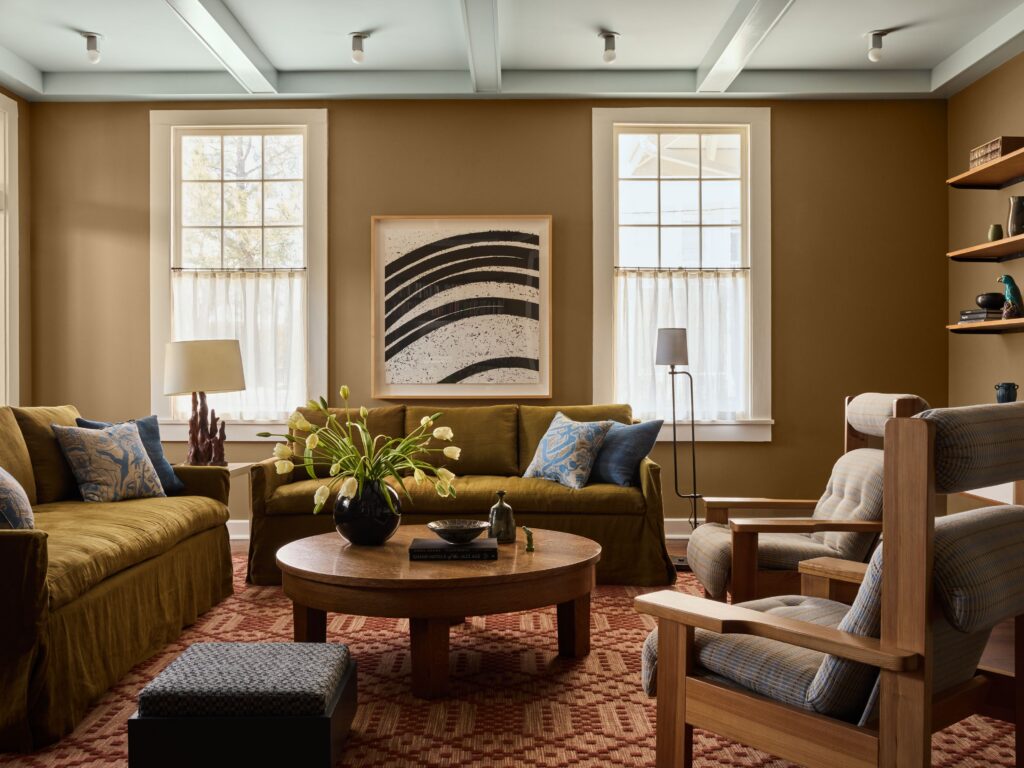
Resoundingly, color drenching was the trend cited most by designers—some love it, some are ready to see it go, but wherever they fall, designers agree it’s made a centerstage appearance. Color drenching is the technique of coating a space in a single hue, creating a bold, monochromatic, and often maximalist effect. This year, it was part of the departure from neutrals, back into deep, rich color: “We’re moving into color-drenched rooms and away from white-on-white everything,” says Jade Joyner, cofounder and principal designer at Metal + Petal. “Color blocking and color drenching are especially strong for the winter months, bringing depth and coziness to interiors,” adds Danielle Chiprut, founder and principal designer at Danielle Rose Design Co.
Moody color palettes
Moody color palettes have also been in large demand this year, which designers argue correlates with the overall appetite for maximalism. “We are seeing a shift into color,” says Marianne Jones, founder and principal designer at Marianne Jones Interior Design. “[We’re] moving away from off-white and quiet walls to the use of saturated colors such as aubergine, greens, and yellows, leaning into color drenching on walls.” Joyner is in agreement, adding “Burgundy, olive, ochre, and tobacco are defining this era of color confidence,” she adds. Bold color, and its luxe aesthetic, is here to stay.
Livable luxury
This year, livable luxury was as buzzy as it sounds. “Clients are craving homes that feel timeless but still personal…performance fabrics that don’t look performance, natural materials that age gracefully, and lighting that feels both functional and artistic,” says Diana Wagenbach, principal and founder at Studio W Interiors. “They want practicality like smart storage, efficient space planning, and family-friendly fabrics, but they don’t want to compromise on beauty,” Danielle Chiprut, founder and principal Designer at Danielle Rose Design Co., concurs.
Source: Read the original article | Published: November 03, 2025