
Editor's Note
This editor’s note highlights the key facts and market implications behind “FedEx and UPS File Tariff Refund Claims for Thei”, with emphasis on sourcing, product fit, fabrication, logistics, or buyer impact.
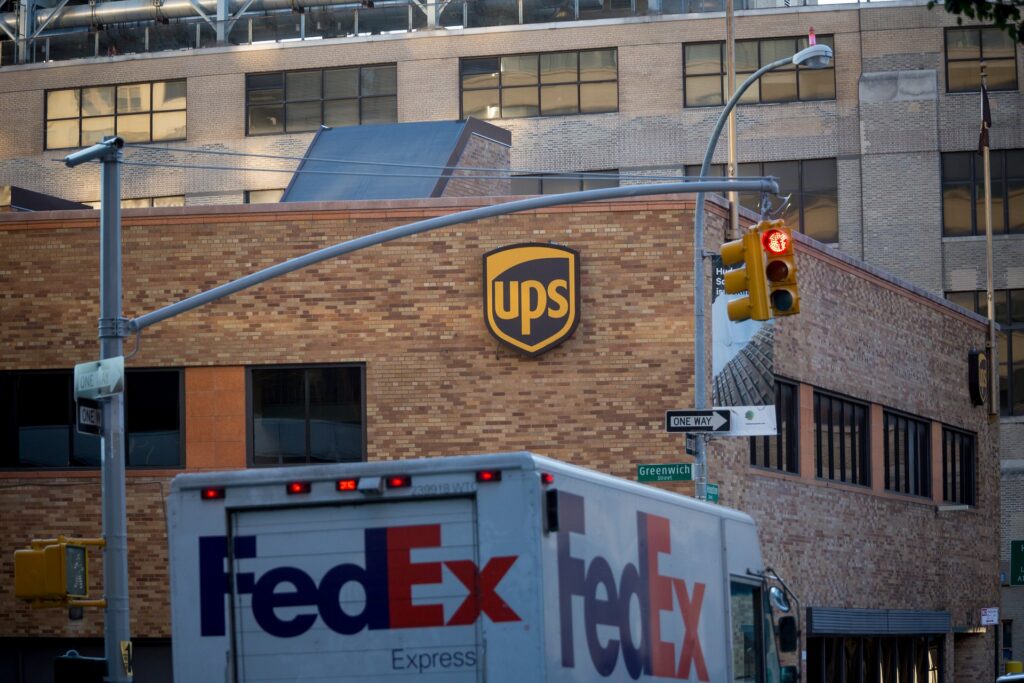
FedEx and UPS have begun filing tariff refund claims with U.S. Customs on behalf of their shipping clients, after U.S. Customs and Border Protection (CBP) launched a new portal this week to process refunds for duties collected under the International Emergency Economic Powers Act (IEEPA).
For shipments where it acted as the official importer, UPS said it will pursue IEEPA tariff refunds directly with CBP on behalf of its clients. No action is required from clients to start the process. UPS warned that the timeline from CBP to the end customer could extend up to three months, as funds must first be received by UPS before being distributed.
“We remain focused on keeping shipments moving and helping to ensure our customers can fully exercise their rights throughout this complex process,” UPS said in a statement.
FedEx has also moved forward with the claims process. All amounts returned by CBP to FedEx will be passed on to the shippers and consumers who originally bore the cost of the tariffs; the carrier also said it is handling the necessary documentation to support these refund claims on behalf of clients.
“Supporting our customers as they navigate regulatory changes remains our top priority,” FedEx said in a statement.
The CBP refund portal, called the Consolidated Administration and Processing of Entries (CAPE), went live at 8 a.m. ET on April 20. The system allows filers and authorized customs brokers to submit refund requests via the secure ACE data portal. CBP said valid refunds will generally be issued within 60 to 90 days of accepting a claim, although entries under compliance review, suspension, or extension may take longer.
The first phase of CAPE is limited to unliquidated entries and entries liquidated within the previous 80 days. CBP said it plans to add more features in later phases to cover more complex scenarios, including entries flagged for reconciliation, entries covered by open protests, and entries for which liquidation is final.
The IEEPA tariff refunds stem from a Supreme Court decision that overturned certain tariffs imposed under that law. Only duties collected under IEEPA — the authority the Supreme Court overturned — are eligible for refunds; other tariff regimes, including those authorized under Section 232 of the Trade Expansion Act of 1962 and Section 301, are not affected.
Companies, including FedEx and Dollar General, had already sued to recover IEEPA tariff payments, joining more than 2,000 companies that filed lawsuits after the Supreme Court decision. FedEx had described its lawsuit as necessary to protect its rights as a filer. With the CAPE portal now open, at least some of these refunds could be processed without requiring ongoing litigation for eligible entries.
Speaking on CNBC's "Squawk Box," former President Donald Trump said he would "remember" all companies that chose not to seek refunds.
Source: Read the original article | Published: April 21, 2026